
Asian CricketAbhishek Sharma's 38-Ball 113 Helps India Chase 199 in 13.2 Overs and Lead New Zealand 3-0
Asian Cricket
Abhishek Sharma's 38-Ball 113 Helps India Chase 199 in 13.2 Overs and Lead New Zealand 3-0
अभिषेक शर्मा ने न्यूजीलैंड के खिलाफ तीसरे T20I में 38 गेंदों में 113 रन बनाए, जिसमें 11 छक्के और 9 चौके शामिल रहे। भारत ने 198/3 के जवाब में 199 रन का लक्ष्य 13.2 ओवर में चार विकेट पर हासिल किया और सीरीज में 3-0 की बढ़त ली। अभिषेक ने 35 गेंदों में शतक पूरा किया और 10+ छक्कों वाली T20I पारियों की सूची में क्रिस गेल से आगे निकले। हालांकि यह रिकॉर्ड संदर्भ-आधारित है क्योंकि 2019 के बाद सभी सदस्य देशों को पूर्ण T20I दर्जा मिलने से ऐसे आंकड़े बढ़े हैं। 15 वर्षीय वैभव सूर्यवंशी ने 19 गेंदों में 45 रन बनाए। मैच का स्थल, टॉस और गेंदबाजी आक्रमण की संरचना उपलब्ध जानकारी में नहीं थी, इसलिए दीर्घकालिक निष्कर्ष सतर्कता से निकालें।
India chased down 199 in 13.2 overs for the loss of four wickets in the third T20I of the five-match series in New Zealand, winning by six wickets and taking an unassailable 3-0 lead. The match was defined by Abhishek Sharma's explosive 113 off 38 balls, an innings that included 11 sixes and nine fours. He reached his century in 35 balls and gave India such momentum that the chase was effectively settled long before the finish. India had 40 balls to spare, which is the most telling number of the contest.
New Zealand had earlier made 198/3 in 20 overs. Daryl Mitchell anchored the innings with an unbeaten 89 off 52 balls, giving the hosts a competitive total. India's bowling pulled things back in the middle and death overs, but the decisive passage came in the powerplay. India raced to 118/0 in six overs at a run rate of 19.67. From that point, the remaining target was 81 off 84 balls, a required rate of about 5.8 per over. In T20 cricket, that is a position of near-total control. India eventually finished on 199/4 in 13.2 overs, chasing at roughly 14.9 runs per over against New Zealand's first-innings rate of 9.9.
Abhishek's innings produced a strike rate of 297.4, which is an extreme outlier. Of his 113 runs, 102 came in boundaries, or 90.3 percent. He hit a boundary off 20 of his 38 balls, or 52.6 percent. That reflects sustained aggression, but it also shows that power, not rotation, was the engine of the innings. His strike rate on non-boundary balls was around 61, suggesting that on slower surfaces or bigger grounds his scoring model could be neutralised. He was caught at deep mid-wicket off Kyle Jamieson, which fits the profile: the arc that produces his sixes is also the arc where he can be dismissed.
The innings took Abhishek past Chris Gayle in the list of T20I innings with 10 or more sixes. It was Abhishek's third such innings, compared with Gayle's two. Karanbir Singh tops that list with five such innings, while Adrian Dunbar and Kendel Kadowaki-Fleming have two each. This is where context matters. Since the ICC granted full T20I status to all member nations in 2026, the volume of T20I cricket against lower-tier opposition has expanded sharply. A counting record such as most innings with 10 or more sixes is therefore not a clean like-for-like comparison. Gayle's T20I career was built in a different era, with fewer matches and different opposition quality. A fair comparison would use sixes per 100 balls and innings against Full Member nations only. The headline claim can be factually true while remaining analytically incomplete.
Abhishek's technique is leg-side-power dominant and high-variance. Eleven sixes and nine fours indicate a batter whose scoring arc and dismissal arc overlap heavily. On a surface with extra bounce, or against a well-set deep mid-wicket field, that same arc becomes the dismissal route. His innings should not be treated as a permanent benchmark. The available information does not include his career average, career strike rate or recent trend. The correct assessment is therefore that this was an exceptional T20I innings by a young opener whose career baseline is still unknown.
The other notable innings was from 15-year-old Vaibhav Sooryavanshi, who made 45 off 19 balls at a strike rate of about 236.8. He and Abhishek shared a 133-run opening stand, with Abhishek contributing about 85 percent of the partnership. That was not a balanced partnership in the conventional sense; it was a solo innings with a supporting role. Sooryavanshi's talent is clear, but one innings is not enough for a long-term projection. Playing senior international cricket at 15 raises physical development, workload and psychological pressure concerns. There is no universal ICC minimum age for senior men's internationals, so safeguarding and workload management remain board-level decisions.
Daryl Mitchell's unbeaten 89 off 52 was the innings most likely to be underweighted by the coverage. It was the reason New Zealand reached 198 rather than a much lower total. India's death bowling improved, but Mitchell's anchoring and acceleration kept the hosts in the contest.
For India, the win is emphatic, but the scoreline should not be read as proof that every part of the team is settled. The 118/0 powerplay effectively decided the match. After the 133-run opening stand ended, the remaining batters contributed about 66 runs for four wickets. That matters because a similar top-order failure in a knockout would put the middle order under severe pressure. India's innings also ended in 13.2 overs, so their death batting was never tested. That phase is unobserved, not proven strong. The 3-0 away lead is a genuine signal of adaptability, but the remaining two matches are dead rubbers and will invite rotation and experimentation, which can contaminate further statistical comparisons.
From a commercial and auction perspective, the innings is a strong highlight-driven signal. It can boost Abhishek's market appeal ahead of the next IPL cycle, but the precise valuation impact is unknown. The risk is that one innings is treated as proof of established international quality. A better approach is to price players on rolling 12-month rate metrics, adjusted for opposition quality and conditions. For Sooryavanshi, the commercial risk is different: brand building at 15 creates governance and welfare questions for boards and franchises.
Overall, the performance and the result are real and impressive. Chasing 199 in 13.2 overs in New Zealand after conceding 198/3 is a substantial T20I achievement. Abhishek's 297.4 strike rate and 35-ball century are elite-band numbers. But the historical framing around overtaking Chris Gayle is context-blind and should be treated cautiously. The biggest risk is cross-format over-extrapolation: one T20I innings has almost no predictive value for ODI or Test capability. The second risk is treating a single outlier as a career benchmark. The third is ignoring the workload and safeguarding issues around a 15-year-old. The fourth is allowing an opening-stand-driven win to mask middle-order fragility. Venue, toss, date and the composition of the bowling attack were not available in the source material, so some conclusions must remain provisional. The match is a clear example of India's powerplay-first T20I batting model, but one innings cannot be treated as proof of an entire career.
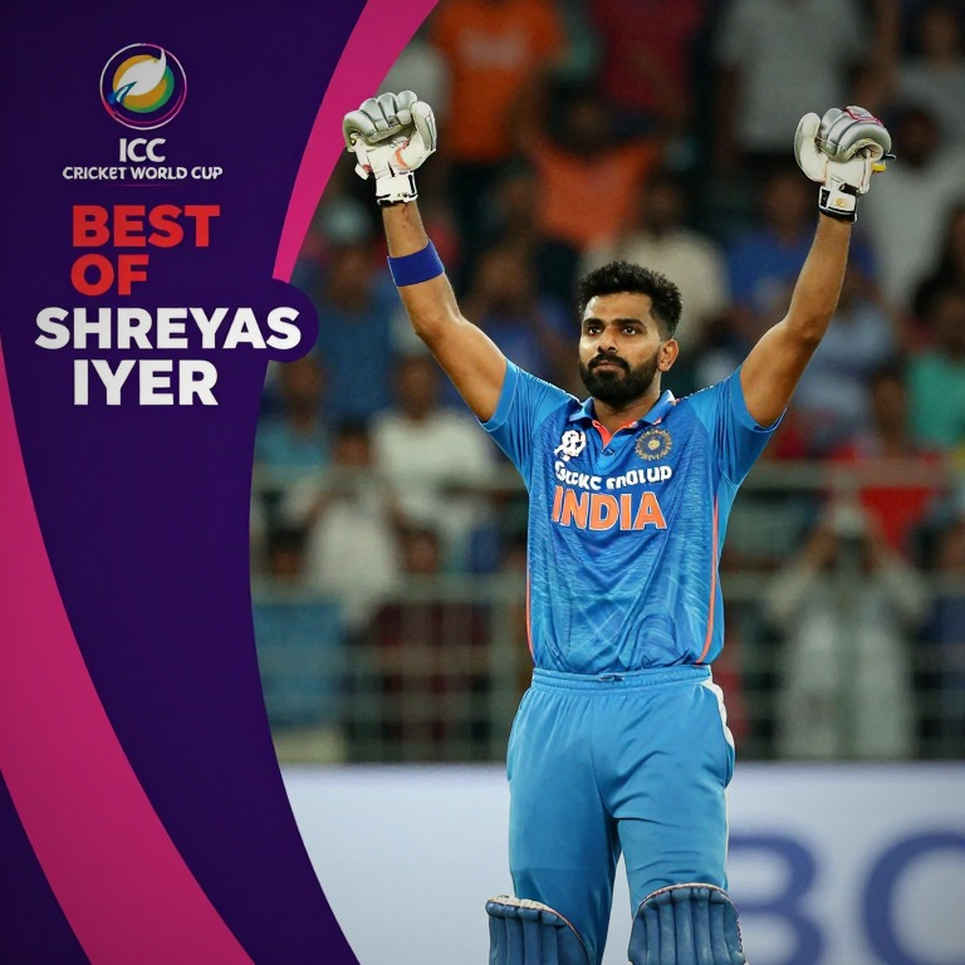
संबंधित खिलाड़ी
लोकप्रिय/पसंदीदा पुस्तकें
An Empty Frame in the Season of Noise: Auditing a Cricket Decoding Pipeline2026-11-01
Asian Cricket's Balancing Act: Format Clutter, League Expansion and Player Workload2026-11-01
The New Geography of Asian Cricket: The Widening Gap Between Money, Talent and Performance2026-10-31
Praise After Three Defeats: Harry Brook's 'Tactical Brain' and the Very Short Ledger of Four Matches2026-10-31
One Blow in the 78th Over: Mominul Haque's Concussion, Zakir Ali's Entry and a Top Order Coming Apart2026-10-31
The Empty Ledger: A 1,532-Word Cricket File That Carried No Facts At All2026-10-31
The New Geography of Asian Cricket: Power, Market and Talent2026-10-31
Parth Bhut: From Junagadh's bylanes to Saurashtra's best Ranji figures2026-10-31
अनुशंसित
Empty Notebook, Steady Pen: Why Cricket Reporting Cannot Publish Without a Fact2026-10-28
Empty Data, Empty Verdict: The Silent Failure Inside Cricket's Analysis Pipeline2026-10-25
The New Geography of Cricket in Asia: A Triangle of Money, Calendar and Power2026-11-01
A Mirpur Morning: Twenty-Three Balls, the Fifth-Stump Channel, and Bangladesh's Three-Spinner Bet2026-10-29
429/4 and Still Lost: Rawalpindi's Pitch, Brook's 202, and the One Ball England Never Bowled2026-10-24
The Hybrid Model: How Asian Cricket Turned a Political Refusal Into a Fixture List2026-11-01
The New Geography of Asian Cricket: The Widening Gap Between Money, Talent and Performance2026-10-31
Concussion, Seven Days and a Missing Date: The Paper Trail Behind Bangladesh's Squad Change2026-11-01
अनुशंसित
The Hybrid Model: How Asian Cricket Turned a Political Refusal Into a Fixture List2026-11-01
Ranji Trophy Round 3 Day 1: Mumbai Take On Haryana, Jammu & Kashmir Face Baroda Amid Upset Possibility2026-10-27
Mirpur, First Morning: A Three-Spinner Bet and One Seaming Ball — Reading Bangladesh's Mismatch Ledger2026-10-29
Pink jerseys, pink stumps and an empty scorecard: Pakistan's breast cancer match in Lahore2026-10-26
Fakhar Zaman's 127 and a 326 Chase: Lahore's Title, and Three Questions the Record Left Out2026-11-01
Parth Bhut: From Junagadh's bylanes to Saurashtra's best Ranji figures2026-10-31
The New Geography of Asian Cricket: Leagues, Revenue and the Shifting Balance of Power2026-11-01
Not a Bumrah Comparison, But 'He Is There': Vihari's Half-Sentence and the Real Gap in India's Pace Attack2026-10-31
अनुशंसित
39 of 40 Wickets to Spin at Palam: The Strongest Evidence for Shami's Absence Is the Surface, Not the Scoreboard2026-10-24
The New Geography of Asian Cricket: The Widening Gap Between Money, Talent and Performance2026-10-31
The 'Null Result' in Cricket Analytics: When a Data Pipeline Fails Silently2026-10-31
282 and 217*: Three Venues, One Day, and a First-Class Ledger That Needs Careful Reading2026-10-26
Empty Data, Empty Verdict: The Silent Failure Inside Cricket's Analysis Pipeline2026-10-25
The Null State: When a Cricket Story Came Back as an Empty File2026-10-30
Bhuvneshwar Kumar's Bowler-Control Claim: Small Boundaries, Rising Batting and an Incomplete Ledger2026-10-28
The Case of the Empty Column: How Cricket Data Loses Its Credibility in Asia2026-11-01