
Hardik Pandya in MrBeast's $100,000 baseball challenge: what the video shows, and what stays unverified
हार्दिक पांड्या MrBeast के "Beat Professional Athlete, Win $100,000" शीर्षक वाले यूट्यूब वीडियो में बेसबॉल चैलेंज का हिस्सा बने; वीडियो 31 अक्टूबर को अपलोड हुआ, पर साल का उल्लेख नहीं है। वीडियो में उन्हें बल्लेबाज़ी करते और गेंद स्टेडियम के बाहर भेजते देखा जा सकता है, और इनाम की राशि 1,00,000 डॉलर थी। "पहले कभी बेसबॉल नहीं खेला" हार्दिक का अपना कथन है, स्वतंत्र रूप से पुष्टि किया हुआ तथ्य नहीं। यह दावा कि उन्होंने पूरी इनाम राशि चैरिटी को दान कर दी, केवल मूल खबर के शीर्षक में मिलता है, पाठ में नहीं, और इसकी कोई स्वतंत्र पुष्टि नहीं है — इसे अपुष्ट दावा माना जाना चाहिए। मूल रिपोर्ट में दिया गया ₹94 लाख का आंकड़ा 1,00,000 डॉलर पर लगभग 94 रुपये प्रति डॉलर की दर मांगता है, जो हाल की दरों से मेल नहीं खाता, इसलिए रुपये वाला रूपांतरण दोहराने योग्य नहीं है।
Indian cricketer Hardik Pandya has appeared in a YouTube video by creator MrBeast titled "Beat Professional Athlete, Win $100,000" — a format in which the prize on offer was one hundred thousand dollars for beating a professional athlete. The video was uploaded to MrBeast's channel on 31 October. The year of the upload is not specified in the available material, and that small-looking omission matters: a story built on a viral video has a shelf life of days, and a date without a year can neither be archived nor checked later.
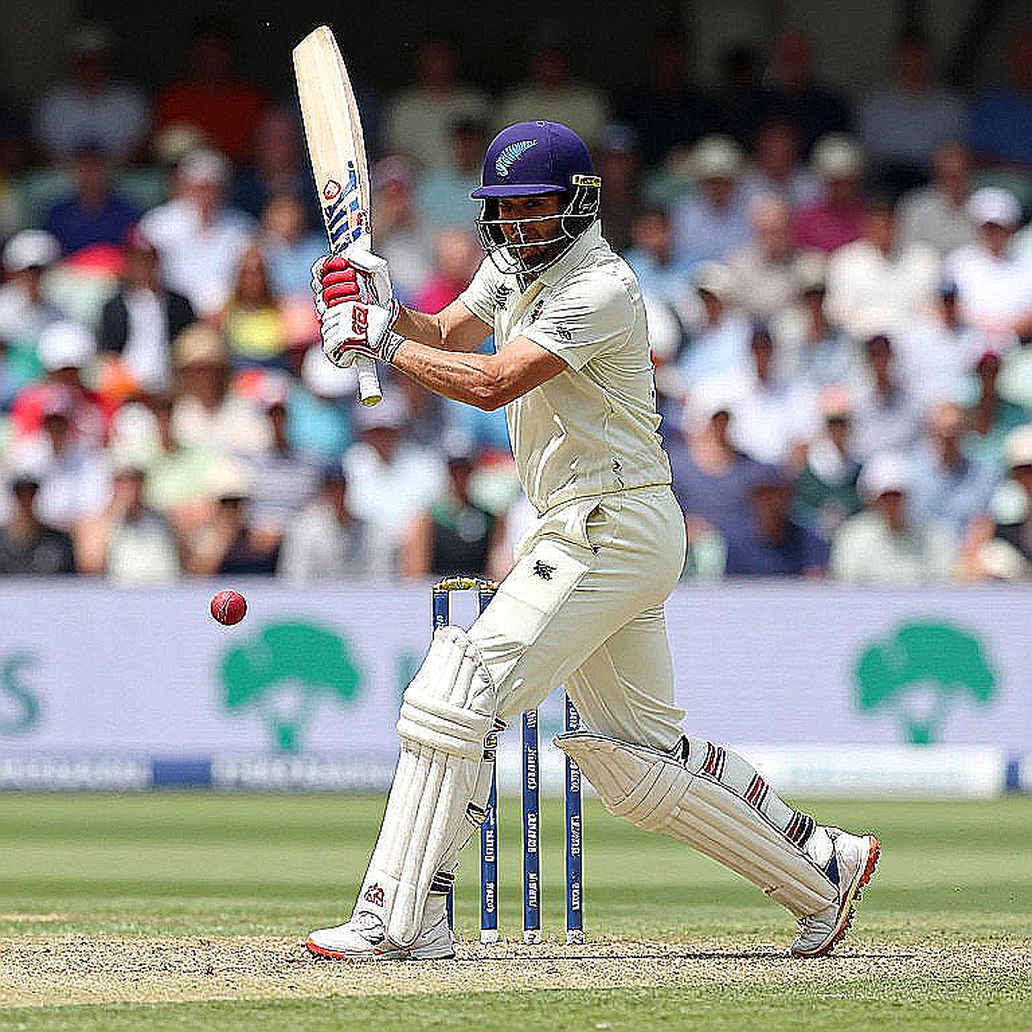
What the video shows directly is Hardik batting and sending the ball out of the stadium. That is the entire evidentiary base of the story — its strength and its limit at once. It is verifiable by any viewer, and it tells us only what the video already tells us.
The part of the story that travelled furthest is the claim that Hardik donated the entire prize money to charity. That claim appears in the original headline and nowhere in the body: no charity named, no mechanism described, no independent source cited. This report therefore records it as an unverified claim, not as fact.
The format: who was playing whom
The essential unanswered question is what the contest actually was. The video's title describes a format in which a challenger arrives to beat a professional athlete — which makes the professional the gatekeeper and the challenger the aspirant. The article instead framed it as Hardik defeating MrBeast, with MrBeast as the opponent. Those are not the same contest. The report never establishes who was pitching and who was batting, how many attempts Hardik was allowed, what event triggered the $100,000, or whether Hardik was there as a challenger or as the "professional athlete" others had come to beat — a cricketer cast as the professional in a baseball contest is a plausible joke in itself, and if that was the case the entire frame changes.
Edited challenge videos routinely allow many attempts and keep only the successful ones. If that happened here, "put up a good performance" loses its weight, and "three balls out of the stadium" reads differently. The report described an outcome without ever describing the game. That is the second-most-serious flaw after the donation.
What is self-reported
The claim that Hardik had never played baseball is his own, and should be presented as such — attributed to him, with the medium specified: said in the video, posted on social media, or given in a separate interview. Those carry different evidentiary weight. Quoting a line spoken in the video is reporting; quoting a post risks turning promotional material into news. "Never played before" is also a familiar framing device in content videos, a modesty that is part of the performance. It need not be false, but it cannot be treated as independently confirmed — and the original article built its entire underdog narrative on it.
The donation claim
The headline asserts that Hardik donated the whole prize to charity. The body never says it. The provenance of the claim is therefore the editor who wrote the headline, not the reporting. Three consequences follow. The most newsworthy element becomes the least sourced one — the inverted pyramid is inverted, with an unverified hook and verified filler. Charitable-donation claims are legally and reputationally sensitive; if the money reached charity through the channel's own disbursement, a common MrBeast format, then "Hardik donated" misassigns both agency and credit. And if the headline came from a social post or the subject's own caption, the article is laundering a promotional claim as reported fact.
Three questions the body should have answered: which charity; how much actually reached it — the full $100,000, post-tax, or channel-disbursed; and who decided, Hardik or the format.
The rupee arithmetic
The original report put the prize at ₹94 lakh. For $100,000 that implies a rate of roughly ₹94 per dollar, some seven to thirteen per cent above the plausible recent range. Either the conversion is stale, or the prize exceeded $100,000, or the figure was rounded upward. Without a publication date the exact rate cannot be pinned, but no recent rate makes ₹94 lakh correct for exactly $100,000. The error is small; the signal is not. A two-second calculation went unchecked. This report uses the dollar figure and drops the rupee conversion.
Terminology
The original called it a home-run challenge in one place and "three balls out of the stadium" in another. A home run and a ball leaving the stadium are not the same event, and a baseball-literate reader will notice. Pick one and match it to the video. Brand styling was also inconsistent — Mr Beast and MrBeast — cosmetic, but the kind of thing that signals no copy-editing pass.
The underused angle: CarryMinati
Indian creator CarryMinati (Ajey Nagar) is mentioned three times in the original and quoted zero times. That is odd, because the defensible reason to cover this story for an Indian audience is not the baseball result but an Indian creator appearing inside a global MrBeast format. Hardik is there too, and the pairing moves the item from cricket news to creator-economy crossover. A single sentence from CarryMinati would give the coverage a footing. As it stands he is a name without a voice.
Four big names, no baseball player
The original lists LeBron James, Erling Haaland, Simone Biles and Caitlin Clark — basketball, football, gymnastics. In a baseball challenge, not one baseball player is named. It should be verified whether these people appeared on camera or were merely referenced; if the latter, the list is padding.
Career context
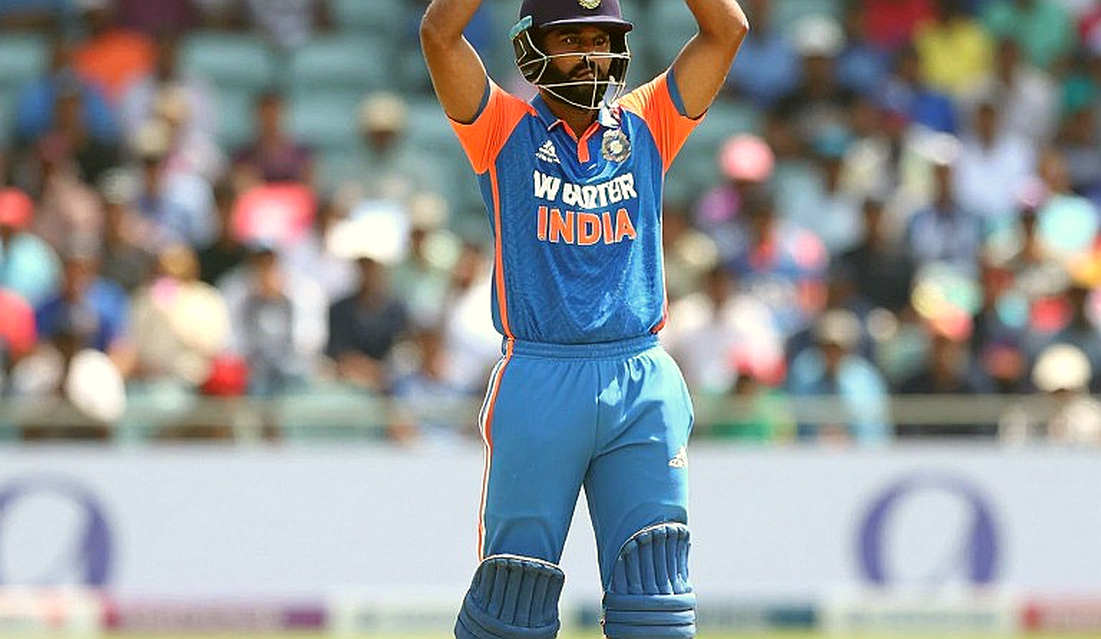
A line of context is needed on why a cricketer is doing this. Hardik Pandya is a established Indian all-rounder — a right-handed batter and right-arm medium-fast bowler who has played all three formats for India, has captained Mumbai Indians in the IPL, and has been part of major international wins in recent years. His public profile has long extended beyond the field, which is why a global creator format casts him. Without that context the story is a viral clip that goes stale in 48 to 72 hours.
What can and cannot be reused
Reusable, with the video itself as the source: Hardik Pandya took part in a baseball challenge in a MrBeast video and hit the ball out of the stadium. Reusable: the prize was $100,000, minus the rupee conversion. Reusable only with explicit attribution to Hardik, in-video: that he had never played baseball. Not reusable without independent confirmation: that he donated the entire prize to charity. Verify "three balls out of the stadium" against the video before repeating it.
What to watch next
Whether an independent source for the donation emerges — a public acknowledgement from a charity, or confirmation from MrBeast's team. If it does, the strongest part of the story will be the part that is currently the weakest. Second, the mechanics of the format, without which the word "won" has no fixed meaning. And third, the larger shift this episode signals: Indian athletes now appear inside global content formats as well as on their own fields, and their role there is not yet settled. This story is an example of that uncertainty — exciting, and still incomplete.